
A clamp-on ultrasonic flow meter can provide highly accurate flow measurements when properly installed, configured, and used in the right application. Unlike traditional meters that require pipe cutting or system modifications, clamp-on technology measures flow from outside the pipe using ultrasonic signals.
At Precision Energy Solutions, we use clamp-on ultrasonic technology to help hospitals, commercial buildings, industrial facilities, data centers, and energy systems across Texas verify flow rates without disrupting daily operations.
For facilities that need reliable data without expensive downtime, a clamp-on ultrasonic flow meter provides a practical solution for flow verification, troubleshooting, and system performance testing.
How Accurate Is a Clamp-On Ultrasonic Flow Meter?
A clamp-on ultrasonic flow meter can achieve excellent accuracy when technicians properly evaluate the piping system and configure the equipment correctly.
The accuracy of a measurement depends on several factors, including:
- Pipe material and condition
- Pipe diameter and wall thickness
- Fluid type
- Flow profile
- Sensor placement
- Proper calibration and setup
Before testing begins, technicians collect important system information to ensure the ultrasonic sensors are positioned correctly and the meter receives accurate readings.
At Precision Energy Solutions, we focus on field-verified measurements to help facility managers understand actual system performance instead of relying on estimated flow values.
How Does a Clamp-On Ultrasonic Flow Meter Measure Flow?
A clamp-on ultrasonic flow meter uses ultrasonic sound waves to measure the movement of fluid inside a pipe.
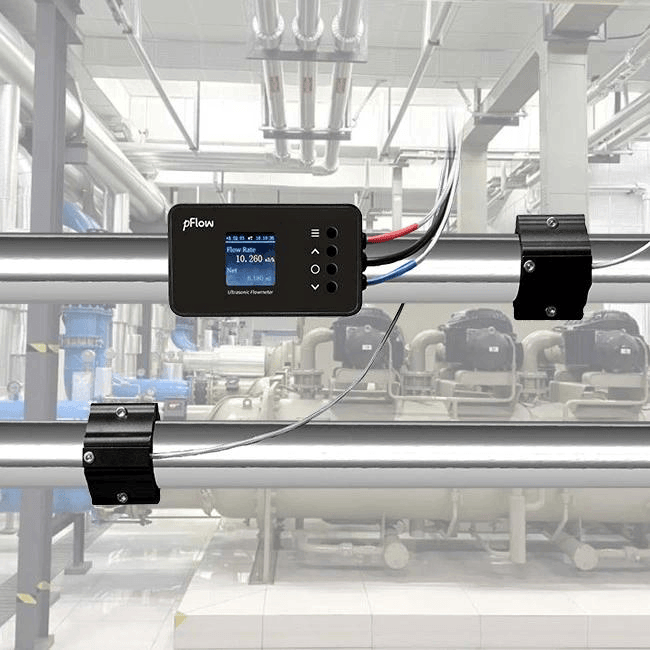
The process works by attaching sensors to the outside of the pipe. These sensors send and receive ultrasonic signals that travel through the pipe wall and the moving fluid.
The meter compares the difference in travel time between signals moving with the flow and signals moving against the flow. This information allows the equipment to calculate fluid velocity and determine the flow rate.
Because the sensors remain outside the pipe, this method provides non-invasive flow measurement without requiring:
- Pipe cutting
- Welding
- System shutdowns
- Internal meter installation
This makes it especially useful for facilities that need flow measurement without shutdown.
What Factors Affect Ultrasonic Flow Meter Accuracy?
Even advanced measurement equipment depends on proper installation and system conditions.
Several factors can influence accuracy:
Pipe Conditions
The pipe material, thickness, and surface condition affect how ultrasonic signals travel through the system. Clean, accessible pipe surfaces allow for better sensor performance.
Sensor Installation
Correct sensor spacing and placement are essential. Improper positioning can create inaccurate readings.
Flow Conditions
Stable flow conditions provide more reliable measurements. Turbulence, air bubbles, or inconsistent flow patterns can impact results.
Fluid Characteristics
The type of liquid or gas being measured affects how ultrasonic signals move through the system.
Because of these variables, professional installation and testing are important for dependable results.
Why Use Clamp-On Ultrasonic Flow Meters Instead of Traditional Flow Meters?
Many facilities choose clamp-on technology because it eliminates the need for invasive installation.
Traditional flow meters may require modifications to existing piping, which can lead to higher costs and operational interruptions.
A clamp-on ultrasonic flow meter offers several advantages:
- No pipe shutdown required
- No interruption to production
- Quick installation
- Temporary testing capability
- Reduced installation costs
- Ability to test existing systems
For hospitals, refineries, commercial buildings, and industrial facilities, avoiding downtime can be one of the biggest advantages.
The non-invasive design of ultrasonic flow meters makes them useful for temporary and permanent measurement applications where modifying existing piping is undesirable. The U.S. Department of Energy’s metering guidance also discusses ultrasonic meters as non-intrusive devices that can be mounted externally on piping.
Applications Where Accuracy Matters Most
Accurate flow data helps facilities make better decisions about energy use, equipment performance, and system improvements.
Common applications include:
HVAC and Chilled Water Systems
Accurate flow readings help verify chilled water circulation, condenser water performance, and HVAC balancing.
Hospitals and Healthcare Facilities
Hospitals rely on dependable measurements to maintain efficient heating and cooling systems while avoiding disruptions.
Industrial Facilities
Manufacturing plants, refineries, and chemical facilities use ultrasonic measurements to monitor process systems and verify equipment performance.
Data Centers
Data centers depend on precise cooling system operation. Flow verification helps identify performance issues before they affect operations.
Accurate flow data is especially important for commercial and industrial HVAC systems. Our HVAC flow measurement services help facility teams verify chilled water, condenser water, and hydronic system performance while keeping existing systems operational.
Can Portable Ultrasonic Flow Measurement Improve System Efficiency?
Yes. Portable ultrasonic flow measurement allows facility teams to collect accurate data when evaluating system performance, planning upgrades, or troubleshooting problems.
By understanding actual flow conditions, businesses can identify issues such as:
- Incorrect flow rates
- Pump performance problems
- HVAC balancing issues
- Energy waste
- System inefficiencies
Accurate measurements give engineers and facility managers the information needed to make informed improvements.
Why Choose Precision Energy Solutions for Ultrasonic Flow Measurement Services?
Precision Energy Solutions provides professional ultrasonic flow measurement services throughout Houston and Texas.
We help customers with:
- Clamp-on ultrasonic flow measurement
- HVAC flow measurement
- Chilled water flow testing
- Thermal energy measurement
- Industrial flow verification
- Pipeline flow measurement
- System diagnostics
Our non-invasive approach allows facilities to collect reliable flow data while keeping critical systems operating.
Conclusion
A clamp-on ultrasonic flow meter provides accurate, reliable flow measurement without the need for pipe modifications or system shutdowns. While accuracy depends on proper installation, pipe conditions, and application requirements, professional ultrasonic testing delivers valuable data for HVAC, industrial, energy, and commercial systems.
If your facility needs accurate flow verification, troubleshooting, or performance testing, Precision Energy Solutions can provide professional ultrasonic flow measurement services throughout Houston and Texas.
Schedule a consultation with Precision Energy Solutions today to verify your system performance without interrupting operations.
Frequently Asked Questions
How accurate is a clamp-on ultrasonic flow meter?
A properly installed clamp-on ultrasonic flow meter can provide highly accurate flow measurements for many liquid and industrial applications.
Does a clamp-on ultrasonic flow meter require pipe cutting?
No, clamp-on ultrasonic flow meters measure flow externally without cutting into the pipe.
Can ultrasonic flow measurement be done while a system is running?
Yes, many ultrasonic flow measurement applications can be completed while the system remains operational.
What industries use clamp-on ultrasonic flow meters?
Hospitals, commercial buildings, data centers, refineries, pipelines, and industrial facilities commonly use clamp-on ultrasonic flow meters.
Can clamp-on ultrasonic flow meters measure HVAC systems?
Yes, they are commonly used for chilled water, condenser water, and HVAC system flow verification.
What affects clamp-on ultrasonic flow meter accuracy?
Pipe conditions, sensor placement, fluid characteristics, and proper equipment setup all affect measurement accuracy.